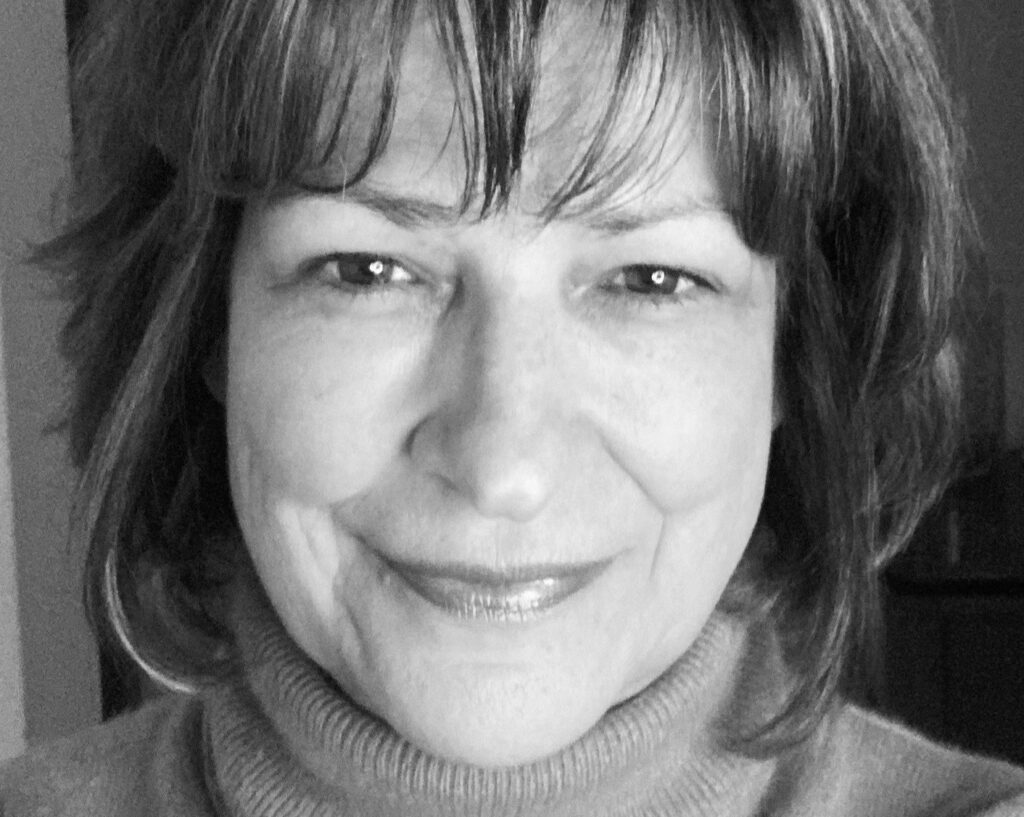
Advancing medicine without ever losing sight of the human side of care
 Medicine was not a calling Dr. Louise Roy had always envisioned for herself. “A twist of fate,” she says with a smile. Naturally curious and a strong student, she found her way into medicine almost organically, even though nothing in her background had pointed her toward the profession.
Even today, her interests extend far beyond medicine. An insatiable reader with a passion for art, art history and music, she can hardly imagine a day without reading at least a few pages of a book.
“Literature and the arts open you up to other realities.”
For her, this curiosity also shapes the way she practises medicine. Exploring other worlds, other stories and other ways of seeing the world helps her better understand people and connect with them with sensitivity.
Finding her path in anesthesiology
During medical school, Louise Roy initially planned to pursue obstetrics and gynecology. She even began her specialty training in the field before a rotation in anesthesiology changed the course of her career.
She was immediately hooked.
She went on to complete subspecialty training in obstetric anesthesia in Pittsburgh before beginning her career at Sainte-Justine Hospital, where she worked in particular with patients experiencing high-risk pregnancies. This practice allowed her to develop more sustained relationships with her patients, an aspect of medicine that has always mattered deeply to her.
After five years at Sainte-Justine and the birth of her three children, including twins, she reorganized her practice to find a better balance between her professional and family life. She joined Charles-Le Moyne Hospital, where she practised for 13 years before moving to the CHUM in 2012.
Throughout her career, she has never been content simply to practise anesthesiology: she has constantly sought to advance the field.
At the CHUM, she was involved in teaching and research in obstetric anesthesia. Among other things, she contributed to the development of new approaches to pain relief and practices that gave pregnant patients greater autonomy while helping reduce the medicalization of childbirth.
She also became deeply involved in neonatal resuscitation, first as an instructor and later as a master instructor. At the CHUM Academy, she took responsibility for the neonatal resuscitation simulation program that launched the training centre’s activities—an achievement of which she remains particularly proud.
A common thread runs through all these accomplishments, one that would come to define her career: advancing practices, sharing knowledge and innovating, without ever losing sight of the person receiving care.
“Being able to make a difference when you connect with someone, to feel that you’ve had an impact on their life, is incredibly rewarding.”
An end-of-life experience that left a lasting impression
For much of her career, palliative care was not directly part of Dr. Roy’s practice. But end-of-life care touched her personally in April 2020, at the height of the pandemic.
Her mother was living in a private seniors’ residence at the time. When she reached the final moments of her life, public health restrictions prevented Louise from being by her side when she died.
It was a painful experience that, even today, she finds difficult to accept.
A few years later, as she began thinking about the next chapter of her professional life, one project caught her attention.
It was the work of a fellow anesthesiologist-intensivist at the CHUM, Dr. Caroline Ouellet.
Retirement… or perhaps a new beginning
As she approached 60, Dr. Roy felt the need to take stock. She considered retirement and even thought about going back to school to explore an entirely different field.
At the same time, she followed the beginnings of Aux trois sentiers with interest. She watched Dr. Ouellet build the organization “one small block at a time,” overcoming obstacle after obstacle to bring to life a new way of supporting people receiving end-of-life care at home.
When Dr. Ouellet invited her to become an on-call physician for the newly created Rapid Response Unit (RRU), she did not hesitate.
She still knew relatively little about palliative care. But she knew Caroline, believed in what she was trying to build and wanted to help move the pilot project forward.
She would go on to be part of the team that cared for Aux trois sentiers’ very first patient.
In June 2025, Dr. Roy officially retired from the CHUM. But rather than closing the chapter on her medical career, she began devoting more of her time to Aux trois sentiers.
Then, in early 2026, when the organization needed someone to take on the role of Medical Director, her name emerged naturally within the team. Having come to know the organization and the people who bring it to life, she accepted this new role.
Advancing care in a different way
As Medical Director, Dr. Roy has rediscovered many of the elements that have inspired her throughout her career.
She develops protocols and provides medical oversight for the clinical team. She explores new ways to better relieve pain and complex symptoms, whether through new pharmacological approaches or techniques such as nerve blocks. She supports knowledge transfer among physicians and works to foster an increasingly collaborative model of practice.
She also wants to bring physicians closer to the rest of the interdisciplinary team and encourage a genuine exchange of knowledge and ideas.
What strikes her about Aux trois sentiers is precisely this ability to move things forward.
She describes a proactive and constructive organization where new ideas can be explored and innovation is not held back by countless obstacles. The freedom to think about new ways of providing care and to help shape the evolution of the model is enormously stimulating for her.
But what may have surprised her most when she joined was the team itself.
The openness. The kindness. The warm welcome. And above all, the consideration team members show one another.
She says she felt “instantly adopted.”
Ultimately, Aux trois sentiers allows Dr. Louise Roy to continue doing what she has done since the beginning of her career: seeking better ways to provide care, sharing what she has learned and advancing clinical practices, all while keeping people at the heart of care.
After a career devoted largely to supporting the first moments of life, she now brings her experience to its final moments.
And for this physician who thought she was ready to retire, it seems there was still one more chapter left to write.